
Danielle Trussoni
Quick Synopsis
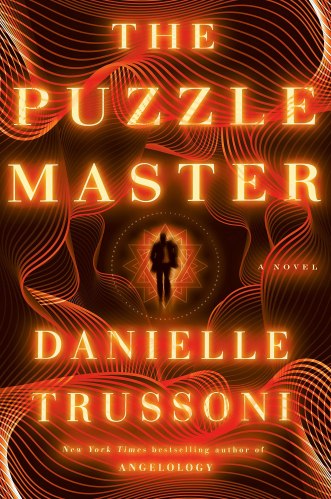
Reality and the supernatural collide when an expert puzzle maker is thrust into an ancient mystery—one with explosive consequences for the fate of humanity—in this suspenseful thriller from the New York Times bestselling author of Angelology.
Publisher’s Synopsis
All the world is a puzzle, and Mike Brink—a celebrated and ingenious puzzle constructor—understands its patterns like no one else. Once a promising Midwestern football star, Brink was transformed by a traumatic brain injury that caused a rare medical condition: acquired savant syndrome. The injury left him with a mental superpower—he can solve puzzles in ways ordinary people can’t. But it also left him deeply isolated, unable to fully connect with other people.
Everything changes after Brink meets Jess Price, a woman serving thirty years in prison for murder who hasn’t spoken a word since her arrest five years before. When Price draws a perplexing puzzle, her psychiatrist believes it will explain her crime and calls Brink to solve it. What begins as a desire to crack an alluring cipher quickly morphs into an obsession with Price herself. She soon reveals that there is something more urgent, and more dangerous, behind her silence, thrusting Brink into a hunt for the truth.
The quest takes Brink through a series of interlocking enigmas, but the heart of the mystery is the God Puzzle, a cryptic ancient prayer circle created by the thirteenth-century Jewish mystic Abraham Abulafia. As Brink navigates a maze of clues, and his emotional entanglement with Price becomes more intense, he realizes that there are powerful forces at work that he cannot escape.
Ranging from an upstate New York women’s prison to nineteenth-century Prague to the secret rooms of the Pierpont Morgan Library, The Puzzle Master is a tantalizing, addictive thriller in which humankind, technology, and the future of the universe itself are at stake.
Review
The Puzzle Master is an addictive thriller about Mike Brink who is a celebrated puzzler with acquired savant syndrome. Brink’s life suddenly changes when a psychiatrist reaches out to him with a puzzle from a patient serving 30 years for murder who has not spoken since her arrest.
I was hooked from the start of The Puzzle Master. The story takes a bit to build up to a quick pace, but I assumed it would in order to present the context and past discussed in the synopsis. But when the story does take off, it is a high-speed chase for answers.
I opened The Puzzle Master expecting a thriller centered on puzzles. However, I found much more than that. I thought I was reading one thing and then the book whips out a surprise and the genre completely changes. Ultimately, Danielle Trussoni weaves an intricate web of puzzles, history, religion, and technology, in which the future of the universe is at stake. I think the best comparison to The Puzzle Master is a Dan Brown novel but with Judaica rather than Christianity.
Despite liking the book, I think The Puzzle Master would have been a better if fewer ideas were packed into the plot. Trussoni seemed to include every idea she had in one book – from golems to dog-knapping to lucid dreaming to quantum physics and artificial intelligence. While everything tied together in the end, the ending became muddled and the story felt like it had went off the rails.
The only other thing I found lacking in The Puzzle Master was the character development. As is typical, the main character is the most developed. Still, I did not feel like I really knew Mike. It did not help that there was an unnecessary romance subplot that came out of nowhere. The secondary characters are even more flat. Readers are told about the characters but lack motivations and inner thoughts to fully understand them. I understand that ultimately the novel includes many characters; nonetheless, I think stronger development of the main and secondary characters would have improved the book.
Trussoni’s writing is pleasant and easy to follow. She wrote in a way that complex puzzles were straight-forward yet intricate. The writing feels sophisticated without being pretentious. The prose includes richly detailed descriptions of the setting that effortlessly formed pictures in my mind. I do wish Trussoni spent as much time explaining explaining complicated religious and scientific concepts as she does on the setting.
Overall, I enjoyed The Puzzle Master and had fun reading it. However, I do think it suffered from an overabundance of ideas shoved into one plot. If you are a fan of Dan Brown, complex plots, and puzzles, I recommend it.
Rating
Overall Rating
Writing
Plot
Character Development
The Puzzle Master
(Mike Brink, #1)
RECOMMENDED
Genre
Mystery/Thriller
Publication Date
June 13, 2023
Pages
384
Publisher
Random House
Storygraph Rating
3.63 stars
Goodreads Rating
3.61 stars
Buy Now



Note: I received a gifted copy of this book from its publisher, Random House. Regardless, I always provide a fair and honest review.
