Barbara Butcher
Quick Synopsis
A “remarkably candid and sensitive” (The Wall Street Journal) memoir of more than twenty years of death-scene investigations by New York City medicolegal investigator Barbara Butcher.
Publisher’s Synopsis
Barbara Butcher was early in her recovery from alcoholism when she found an unexpected lifeline: a job at the Medical Examiner’s Office in New York City. The second woman ever hired for the role of Death Investigator in Manhattan, she was the first to last more than three months. The work was gritty, demanding, morbid, and sometimes dangerous—and she loved it.
Butcher (yes, that’s her real name, and she has heard all the jokes) spent day in and day out investigating double homicides, gruesome suicides, and most heartbreaking of all, underage rape victims who had also been murdered. In What the Dead Know, she writes with the kind of New York attitude and bravado you might expect from decades in the field, investigating more than 5,500 death scenes, 680 of which were homicides. In the opening chapter, she describes how just from sheer luck of having her arm in a cast, she avoided a boobytrapped suicide. Later in her career, she describes working the nation’s largest mass murder, the attack on 9/11, where she and her colleagues initially relied on family members’ descriptions to help distinguish among the 21,900 body parts of the victims.
This is the “breathtakingly honest, compassionate, and raw” (Patricia Cornwell), “completely unputdownable” (Adriana Trigiani, New York Times bestselling author of The Good Left Undone) real-life story of a woman who, in dealing with death every day, learned surprising lessons about life—and how some of those lessons saved her from becoming a statistic herself. Fans of Kathy Reichs, Patricia Cornwell, and true crime won’t be able to put this down.
Book Review
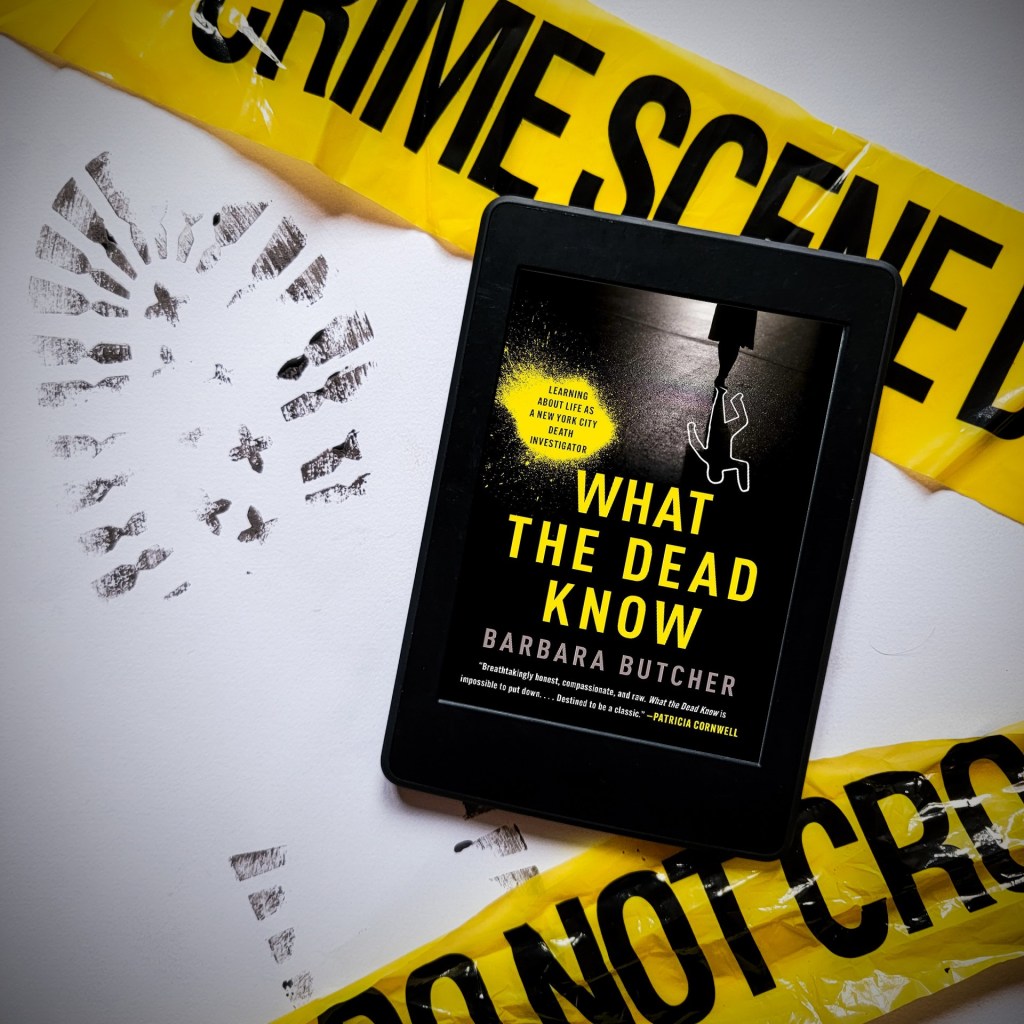
What the Dead Know: Learning About Life as a New York City Death Investigator is Barbara Butcher’s account of her life and career at the New York City Office of Chief Medical Examiner. The book not-so-seamlessly combines reflections on Butcher’s personal life, addictions, and death investigations.
The first portion of What the Dead Knows covers how Butcher ends up with a job at the Medical Examiner’s office. This entails an in-depth account of her alcoholism, drug addiction, self-loathing, and personal relationships. I remember little of the book’s beginnings since it did not really interest me, and I did not expect so much of a memoir when I began the book. Readers are never given a reason to care about Butcher or her struggles, and I think it is likely most people who pick up the book will be disappointed by the beginning.
Eventually, Butcher discusses her training and day-to-day experiences as a medicolegal investigator. These were the details I was anticipating when I decided to read What the Dead Know. Butcher recounts several cases and their details. However, Butcher often veers off to talk about her interactions and comradery with her driver and police officers and how at odds she was with others in her field (read: not like the other girls).
There is little substance that Butcher does not relate back to herself. If the book had been advertised more as a memoir, I would not have had a problem with this (but I also would not have read it). Instead, I thought I would be reading more about investigations, forensic science, and what Butcher learned about humanity along the way. Consequently, the parts that I enjoyed and found the most captivating were the death investigations and the mechanics of determining their causes. But so much of the content is focused on Butcher herself, even the portions I liked were overshadowed.
I appreciated Butcher’s openness and straightforward style but thought her writing is very basic and fails to immerse you in the story. There are plenty of anecdotes to fill the pages but they really lack cohesion and flow. The story’s memoir portions felt disconnected and wedged into narrative, unnecessarily. I thought the self-reflections by Butcher failed to add anything to the book and took away from the content. In the end, readers are not presented with details about “what the dead know” and are left without real conclusions.
I would be remiss if I did not mention the stranger tone of What the Dead Know. Butcher seems to have a strange sense of empathy that is clearly displayed in her writing. While I was not personally put-off by her sarcasm, I think some individuals may be disgusted by her crude comments and sometimes disrespectful behavior. I understand that a career investigating deaths, which are often traumatic or sad, can lead to coping mechanisms others find distasteful. I expected that an editor would have made some changes so the writing would be less objectable to the masses. However, What the Dead Know is rife with Butcher’s jaded, sarcastic, “tough guy” attitude.
Overall, What the Dead Know is a narrative that combines memoir and true crime in a disharmonious manner. If you are interested in the life of Barbara Butcher or an alcoholic’s journey to success, then I think this book may interest you. However, if you are looking for a firsthand account of a career in forensic science and death investigations, I would not recommend this title.
Rating
Overall Rating
Writing
Cohesiveness
Storyline
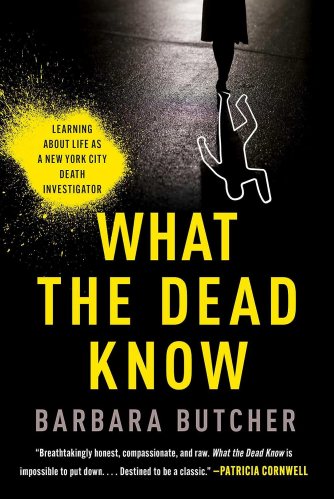
What the Dead Know: Learning About Life as a New York City Death Investigator
RECOMMENDED FOR SOME
Genre
Nonfiction: Memoir; True Crime
Publication Date
June 20, 2023
Pages
288
Publisher
Simon & Schuster
Storygraph Rating
4.08 stars
Goodreads Rating
4.19 stars
Buy Now