Shen Tao
Synopsis | Book Review | Rating | Buy Book | Add to TBR
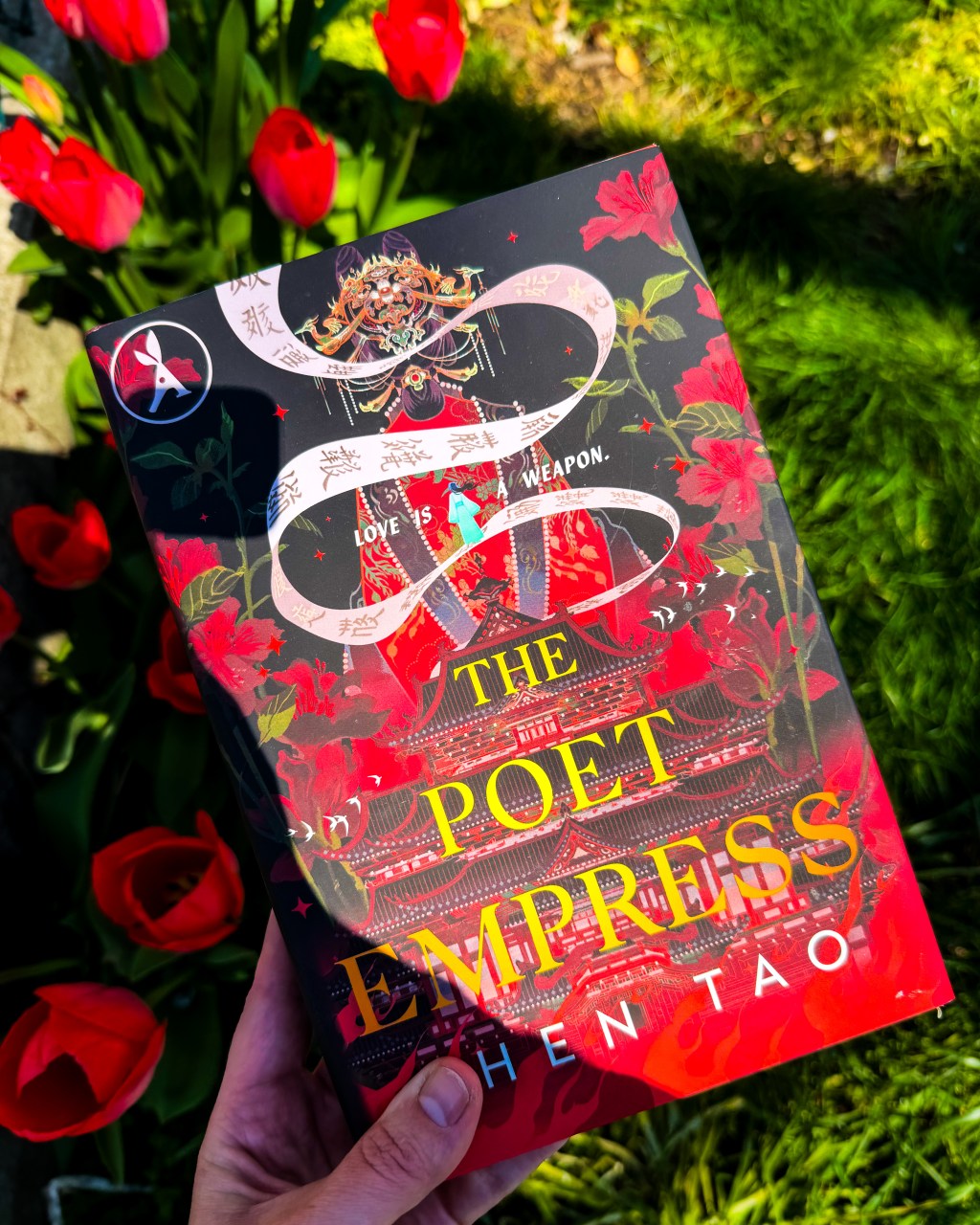
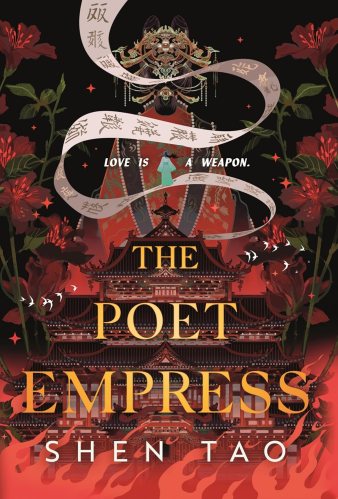
The Poet Empress
HIGHLY RECOMMENDED
Genre
Fantasy
Publication Date
January 20, 2026
Page Count
400
Publisher
Bramble
Storygraph Rating
4.49 stars
Goodreads Rating
4.43 stars
Buy Now


Add to Your TBR


Quick Synopsis
Debut author Shen Tao introduces readers to the lush, deadly world of The Poet Empress, a sweeping, epic and intimate fantasy perfect for fans of The Serpent & the Wings of Night, The Song of Achilles and She Who Became the Sun.
Publisher’s Synopsis
Wei Yin is desperate. After the fifth death of a sibling, with her family and village on the brink of starvation, she will do anything to save those she loves.
Even offer herself as concubine to the cruel, dissolute heir of the blood-gutted Azalea House―where poetry magic is power, but women are forbidden to read.
But in a twist of fate, the palace now stands on the knife-edge of civil war, with Wei trapped in its center. . . with a violent prince.
To save herself and the nation, she must survive the dangers of court, learn to read in secret, and compose the most powerful spell of all. A ballad of love. . . and death.
The Poet Empress is an epic fantasy that explores darker themes, subjects, and scenes that may not be suitable for all readers. Please see the author’s content note at the beginning of the book.
Book Review
The Poet Empress is a debut historical fantasy novel about Wei, a peasant girl from a poor, starving village, who sacrifices herself to become a concubine to the next emperor in hopes of relieving the famine and saving her remaining siblings. In a world where only men can use poetry magic (literomancy) and women are illiterate by law, Wei must navigate the foreign dangers of the royal court and endear herself to a violent, powerful prince who likes no one and kills on a whim. As the current emperor takes his last breath, Wei must choose whether to save herself or her nation.
The Poet Empress drew me in with its unique premise, based in the history of (unnamed) China with a rigid, hierarchical society of dynasties and traditions. While I am vaguely familiar with the concepts of dynasties and emperors, this was my first foray into a novel set among them. Although the synopsis has the air of romantasy, I would encourage readers to go in without the expectation of romance since it is not a plotline and will not be satisfying to those who seek a HEA.
In fact, The Poet Empress is a dark, gritty novel that the depicts the creation of a monster from a good-natured child. I applaud Tao for telling a story rife with abuse, mistreatment, and horrible circumstances without it becoming bleak or a tragedy porn. Instead, this debut novelist expertly approaches suffering from a empathetic perspective that truly aims to understand. Similarly, Wei holds on to her humanity throughout the story, despite everything she withstands. In some ways, the narrative felt like an awakening or coming of age in that Wei discovers the quiet cruelty of mankind and, best of all, relentlessly chooses benevolence and compassion. Despite occurring in a world different from our own, this novel feels like a tonic for current times.
The Poet Empress has a slow-burning plot that is riveting enough for my attention to never waver. Tao’s storytelling in this novel is character-driven, which is typically not my preference. However, the complex, multi-faceted characters whose histories you want to intimately know and understand beg for your attention. Still, the narrative is filled with politics, conflicts of succession, authentic relationships, and plenty of tension. Although The Poet Empress may not be action-heavy, the stakes feel immense and imminent. I loved that the protagonist’s battle becomes one of will and intelligence as she has little else. And best of all, I truly could not predict what would happen next.
Despite eloquent, yet accessible prose, I could not rate The Poet Empress the elusive five stars. While a majority of characters were richly developed, I felt like Tao could have provided a better sense of the protagonist and her personality, as opposed to the conduit she sometimes felt like. Additionally, I wanted a bit more emotional resonance. Despite feeling a range of emotions, I felt some distance from the story. I think this may again stem from Wei’s lack of development. Finally, I was not a fan of the ending. While I recognize it was appropriate, it was not what I thought would have been the most powerful conclusion. In fact, I was outright angry at the ending, but I know I am likely in the minority with that. (However, that tells you just how invested I was in the story.)
Overall, The Poet Empress is a fantastic, brutally bold debut full of emotional complexity and humanity. If you want a riveting narrative that feels like a knife plunged into your chest and slowly twisted (in the best way), this novel comes highly recommended. I am excited to see what Shen Tao comes up with next and if she emerges to popular fantasy’s next darling like R.F. Kuang.
Rating
Writing
Plot
Character Development
